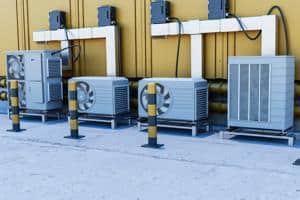
A Variable Flow Refrigerant (VFR) system is an advanced HVAC system designed to provide precise cooling and heating by adjusting the flow of refrigerant to multiple indoor units. Unlike traditional air conditioning systems that operate in fixed cycles, a VFR system continuously adapts to the building’s demand. This allows each zone to maintain its own temperature while reducing energy consumption. Because of its flexibility and performance, VFR technology is widely used in modern commercial HVAC systems and high-end residential air conditioning setups.
How Does a Variable Flow Refrigerant System Work?
A VFR HVAC system uses inverter-driven, variable-speed compressors that control the exact amount of refrigerant sent to each indoor unit. Each room or zone has independent controls, making this a highly efficient multi-zone HVAC system. Some models include heat recovery technology, allowing one space to be cooled while another is heated at the same time. This intelligent refrigerant control improves performance, maintains stable temperatures, and supports energy-saving air conditioning.
Why Is a VFR System More Energy Efficient?
Energy efficiency is one of the biggest advantages of a Variable Flow Refrigerant system. Traditional systems waste energy through constant on/off cycling, but Variable Flow Refrigerant systems run at variable speeds based on demand. This reduces electricity usage, lowers operating costs, and extends equipment life. The ability to transfer heat between zones further enhances efficiency, making VFR one of the most sustainable modern heating and cooling systems available.
Where Are VFR HVAC Systems Commonly Installed?
VFR systems are ideal for buildings that require different temperatures in different areas. They are commonly used in office buildings, hotels, shopping complexes, apartments, and healthcare facilities. Their compact design and minimal ductwork needs make them suitable for renovation projects and structures where space is limited. These systems are a preferred commercial cooling solution as well as a premium option for building climate control in residential properties.
How Does VFR Technology Improve Indoor Comfort?
Comfort improves significantly with a VFR HVAC system because it delivers consistent temperatures and precise humidity control. Each zone can be customized according to occupant needs, eliminating hot and cold spots. The system operates quietly and provides smooth airflow, enhancing indoor air quality and comfort. This level of control makes VFR technology a leading choice for smart climate control systems.
What Are the Main Benefits of a Variable Flow Refrigerant System?
A Variable Flow Refrigerant system offers individual temperature control, lower energy consumption, quiet performance, and flexible installation. It supports simultaneous heating and cooling, making it ideal for large buildings with diverse comfort needs. These benefits combine to deliver reliable, cost-effective, and high-performance HVAC solutions for both commercial and residential environments.
Final Thoughts
As buildings become more energy-conscious and comfort demands increase, Variable Flow Refrigerant (VFR) systems are setting the standard for modern HVAC technology. Their ability to provide zoned control, energy efficiency, and flexible installation makes them a future-ready solution. Whether for offices, apartments, or commercial spaces, VFR technology delivers intelligent, long-term performance in today’s evolving climate control industry.
FAQs
What is the difference between VFR and traditional HVAC systems?
VFR systems adjust refrigerant flow based on demand, while traditional HVAC systems operate in fixed on/off cycles, making VFR more energy efficient and precise.
Can a VFR system heat and cool at the same time?
Yes, systems with heat recovery technology can provide simultaneous heating and cooling in different zones.
Is a VFR system suitable for residential buildings?
Yes, VFR systems are ideal for luxury homes, villas, and apartments that require zoned temperature control.
Does a VFR system require ductwork?
Most VFR systems use minimal or no ductwork, making installation easier in new and retrofit projects.
Are VFR systems cost-effective in the long run?
Although installation costs may be higher, lower energy bills, reduced maintenance, and long lifespan make them highly cost-effective over time.