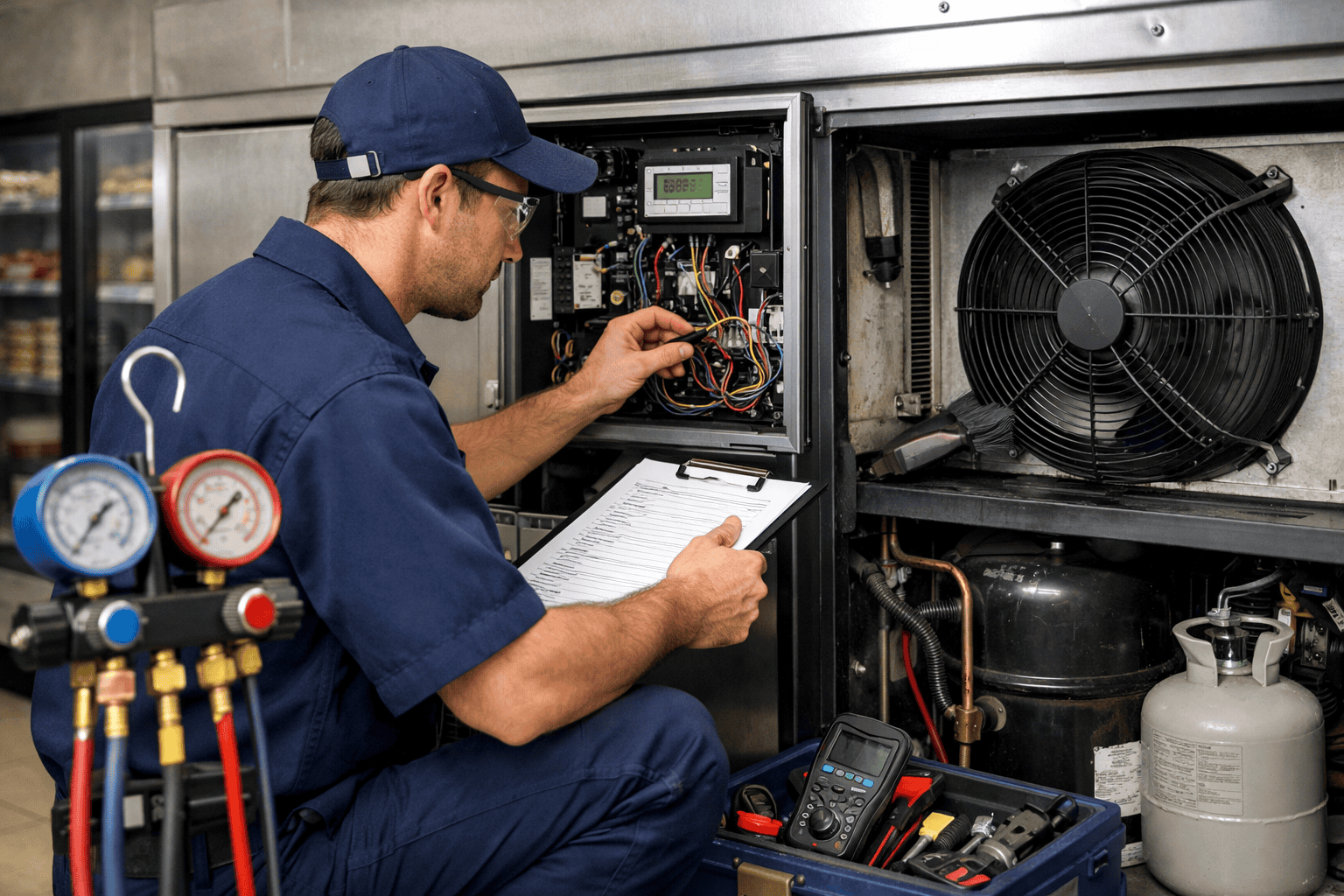
The HVAC industry is rapidly evolving in 2026, especially for commercial buildings, where efficiency, sustainability, and smart technology are becoming top priorities. Businesses are no longer just installing HVAC systems; they are investing in intelligent, energy-efficient, and future-ready solutions.
At AC&R Services, we help commercial clients stay ahead by adopting the latest HVAC trends that improve performance and reduce operational costs.
1. Energy Efficiency & Sustainability Focus
Energy efficiency continues to dominate HVAC trends in 2026. With rising energy costs and stricter environmental regulations, commercial buildings are shifting toward high-efficiency systems that reduce power consumption and carbon emissions.
Modern HVAC systems now include advanced compressors, inverter technology, and energy recovery systems that optimize usage. Businesses are also adopting green building practices and aiming for net-zero energy goals.
Why it matters:
- Lower energy bills
- Reduced carbon footprint
- Compliance with environmental regulations
2. Smart HVAC & IoT Integration
Smart HVAC systems powered by IoT (Internet of Things) are transforming how commercial buildings manage climate control. These systems use sensors and cloud-based platforms to monitor temperature, humidity, and occupancy in real time.
Facility managers can control HVAC systems remotely, automate settings, and improve efficiency across multiple locations.
Key benefits:
- Real-time monitoring
- Remote system control
- Improved operational efficiency
3. AI-Powered Predictive Maintenance
Artificial Intelligence (AI) is revolutionizing HVAC maintenance. Instead of waiting for systems to fail, AI predicts issues before they happen by analyzing performance data.
This reduces downtime, prevents costly repairs, and extends equipment lifespan.
Benefits for commercial buildings:
- Reduced maintenance costs
- Fewer system breakdowns
- Improved system reliability
4. Transition to Low-GWP Refrigerants
One of the biggest changes in the HVAC industry is the shift toward environmentally friendly refrigerants like R-454B. These have significantly lower Global Warming Potential (GWP) compared to older refrigerants.
Governments worldwide are enforcing stricter regulations to phase out harmful refrigerants.
Impact:
- Eco-friendly operations
- Compliance with regulations
- Future-proof HVAC systems
5. Heat Pumps & Electrification
Heat pump repairs are becoming the preferred choice for commercial buildings due to their high efficiency and ability to both heat and cool spaces. This shift supports global electrification and reduces dependence on fossil fuels.
Advantages:
- Energy savings
- Dual functionality (heating + cooling)
- Sustainable solution
6. Improved Indoor Air Quality (IAQ)
Post-pandemic awareness has increased the demand for better indoor air quality in commercial spaces. Businesses are investing in advanced air filtration systems, UV purification, and ventilation upgrades.
Key upgrades include:
- HEPA filters
- Air purifiers
- CO₂ monitoring systems
Why it matters:
- Healthier work environments
- Increased productivity
- Better employee well-being
7. Variable Refrigerant Flow (VRF) Systems
VRF systems are gaining popularity in commercial buildings because they allow precise temperature control for different zones within the same building.
These systems are highly efficient and ideal for offices, hotels, and large facilities.
Benefits:
- Zoned cooling
- Energy efficiency
- Flexible installation
8. Building Automation Systems (BAS)
Building automation is becoming essential in modern commercial infrastructure. HVAC systems are now integrated with lighting, security, and energy management systems for centralized control.
Features:
- Centralized control dashboard
- Automated energy optimization
- Smart scheduling
9. Renewable Energy Integration
Commercial HVAC systems are increasingly being combined with renewable energy sources like solar power. This reduces reliance on the grid and lowers long-term operational costs.
Benefits:
- Lower electricity costs
- Sustainable operations
- Energy independence
10. Shift Toward Service-Based HVAC Models
The industry is moving from one-time equipment sales to service-based models. Businesses now prefer ongoing maintenance contracts, performance monitoring, and energy optimization services.
Why this trend is growing:
- Predictable costs
- Continuous system optimization
- Better ROI
Why These Trends Matter for Businesses
Commercial buildings consume a large portion of global energy, and HVAC systems are a major contributor. Adopting these trends helps businesses:
- Reduce operational costs
- Improve sustainability
- Enhance occupant comfort
- Stay compliant with regulations
How AC&R Services Helps You Stay Ahead
At AC&R Services, we specialize in modern HVAC solutions tailored for commercial buildings. From smart system installations to energy-efficient upgrades and predictive maintenance, we ensure your business stays future-ready.
Conclusion
The HVAC industry in 2026 is driven by innovation, sustainability, and smart technology. Commercial buildings that adopt these trends will benefit from improved efficiency, reduced costs, and better occupant comfort. Partnering with experts like AC&R Services ensures you stay ahead in this rapidly evolving landscape.
FAQs
1. What is the biggest HVAC trend in 2026?
Energy efficiency and smart HVAC systems powered by AI and IoT are the biggest trends shaping the industry.
2. Why are commercial buildings switching to smart HVAC systems?
Smart systems improve efficiency, reduce costs, and allow remote monitoring and control.
3. What are low-GWP refrigerants?
They are eco-friendly refrigerants that reduce environmental impact compared to traditional options.
4. How do heat pumps benefit commercial buildings?
They provide both heating and cooling while consuming less energy, making them cost-effective and sustainable.
5. What is predictive maintenance in HVAC?
It uses AI to detect potential issues before failures occur, reducing downtime and repair costs.