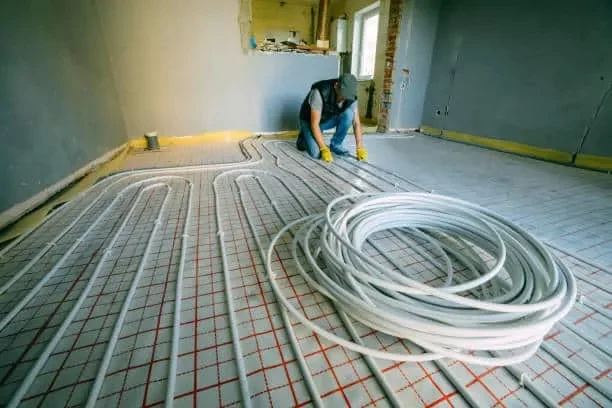
Have you heard of home geothermal heating and cooling? It’s an HVAC system that can save homeowners some serious dough on their utility bills.
Unfortunately, many people have never heard of geothermal, or they don’t understand it. In fact, there are those that imagine it has something to do with confining heat from volcanoes or geysers.
Now that would be rather difficult to pull off, and it would certainly reduce the number of people who could make use of geothermal energy, especially if you live in northeastern Pennsylvania.
Thankfully, there’s no need to reside anywhere in proximity to an active volcano to have an efficient geothermal system installed in your home.
Let’s take a close look at geothermal heating and cooling as described by the experts at AC&R Services, located at 217 Turkey Path Road in Sugarloaf, PA.
What exactly is geothermal heating and cooling?
A geothermal heat pump functions on a simple, yet somewhat radical notion: transporting heat between your home and the earth’s constant underground temperature. In winter, the technique removes dormant warmth from the ground and dispenses it all through your home for continuous comfort.
In summer, the process turns around as the system takes away unwelcome heat from your home and relocates it back to the earth.
This is all made doable by a ground loop – a series of underground pipes distributing a water-based solution. Nothing like other air-source systems that struggle with inconsistent outdoor temperatures, this process provides exceptional efficiency, leading to reduced energy costs, quieter operation and negligible dependence on fossil fuels.
Actually, geothermal heat pump systems are devised to fit various properties and environmental situations. The principal types are closed-loop and open-loop.
- Closed-loop system: A series of continuous pipes loaded with a liquid solution that transmits energy to the geothermal heat pump. These systems can be either vertical or horizontal. Vertical formations need less space but require a well driller to install. The horizontal format is less expensive upfront since it requires a backhoe instead of a well driller.
- Open-looped system: Rather than a closed pipe configuration enclosing heat-transferring liquid, an open-loop system transfers energy by pumping groundwater to the heat pump.
There’s actually a third option, the pond/lake hybrid, an open-loop system that depends on water from a lake or pond rather than groundwater.
Okay, we still aren’t aware of how this all works.
In brief, geothermal heating performs by transporting a temperature-conducting fluid by means of those underground loops of pipes under or close to your home. This permits the fluid to gather the thermal energy placed in the earth from the sun. This works satisfactorily even in the wintriest weather (like this year’s conditions) since the earth below the frost line is a constant 55 degrees year-round.
After capturing the ground’s thermal energy, that fluid then travels back into the heat pump and “trades” its heat energy with liquid refrigerant present inside the heat pump. That refrigerant is then converted into a compressed vapor. The action of compressing that vapor boosts its temperature and once that vapor is hot enough, it enters a heat exchanger which transports that heat to the air. That warm air is then circulated through your home’s existing HVAC ductwork.
Now, for another important question. Does the same geothermal heat pump that heats your home in the winter also produce air conditioning for the summer?
Basically, the heat transfer procedure works backwards. As air flows through your house, your heat pump extracts the heat and transfers it to the fluid circulating to the ground. Since the ground is at a constant lower temperature (55 degrees), heat disperses from the fluid to the ground. The cold air now blowing into your home is the product of removing the heat from the circulated air, relocating that heat to the ground, and sending cool air back into your home.
What are the major benefits of a geothermal heat pump?
- Geothermal heating and cooling are a tidy source of energy. Nothing like oil, propane and gas, heat pumps don’t involve combustion of fossil fuels, rather they get rid of the possible discharge of carbon monoxide while bettering your home’s air quality.
- It’s a “homegrown” source of energy. A dependable, renewable domestic source of energy is certainly superior to relying on uncertain international markets.
- Geothermal heat pumps are incredibly energy efficient. They root out more energy than they use up by transferring heat stockpiled in the earth into or out of your house, benefiting from the earth’s stable temperature. Yes, the price of electricity, oil or natural gas wavers, but the expense of running a geothermal system will remain rather steady. In addition, the electricity costs for a geothermal system are minimal and hardly ever differ month to month.
- Geothermal heat pumps keep going longer than traditional heating and cooling systems and involve negligible maintenance. By converting your system to a heat pump, you’ll eliminate the need for air conditioning. And if you presently heat with oil or propane, you won’t ever have to cope with the irritation of arranging fuel deliveries ever again.
- Geothermal heating works despite the weather conditions above ground, so it won’t ever go on the blink because of a storm or other natural events.
- When your system produces surplus heat, it can redirect it as an additional source of energy for your hot water system.
- Geothermal heating is a smart long-lasting investment. The heat pump has a life span of up to 20 years, and the loop system will last between 20 to 25 years.
Concluding thoughts
Geothermal heating is the clever, long-term and cost-effective choice for year-round comfort and savings. Since temperatures stay constant underground irrespective of the temperature above ground, geothermal heat pumps are enormously efficient in cold climates such as northeastern Pennsylvania.
Besides generating heat more efficiently than oil, gas or electric baseboards, a geothermal heat pump also delivers constant comfort by also acting as your air conditioner in warmer weather. These highly effective heat pump systems can deliver 100 percent of your home’s heating and cooling requirements with no backup system necessary.
Interested? Contact the professionals at AC&R Services at 217 Turkey Path Road in Sugarloaf, PA at your earliest convenience for complete details, including pricing.